Here's why:
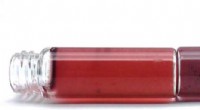
* Bromine (Br₂) is an orange-brown liquid.
* Alkyne molecules contain a carbon-carbon triple bond, which is highly reactive.
* When bromine reacts with an alkyne, it adds across the triple bond, breaking the bond and forming a dibrominated alkane.
* This reaction consumes the bromine, causing the orange-brown color to disappear and leaving a colorless solution.
This color change is a useful indicator of the presence of an alkyne and can be used to distinguish it from other hydrocarbons.