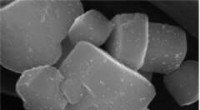
* Ionic Structure: Sodium chloride is an ionic compound, meaning it's composed of positively charged sodium ions (Na+) and negatively charged chloride ions (Cl-). These ions are held together by strong electrostatic forces in a regular, repeating pattern called a crystal lattice.
* Fixed Ions: In the solid state, the ions are tightly packed and locked into their positions within the lattice. They can only vibrate slightly around their fixed positions.
* No Free Charge Carriers: For a material to conduct electricity, it needs free-moving charged particles (charge carriers) that can carry an electric current. In solid NaCl, the ions are not free to move.
* Conducting in Solution: However, when NaCl is dissolved in water, the ions become hydrated (surrounded by water molecules) and separated from the lattice, allowing them to move freely. This means the solution can now conduct electricity.
* Conducting When Molten: Similarly, molten NaCl (liquid state) also conducts electricity because the ions are no longer held in a rigid structure and can move freely.
In summary: Solid sodium chloride does not conduct electricity because its ions are fixed in a crystal lattice, preventing the free movement of charge required for conduction.