* Structure: It has a central ethylene diamine backbone (two amine groups connected by two carbon atoms) with four acetic acid groups attached. These acetic acid groups can lose their hydrogen ions (H+) to become negatively charged.
* Appearance: In its pure form, EDTA is a white crystalline powder.
* Solutions: When dissolved in water, EDTA forms colorless solutions.
Here's a simplified way to visualize it:
Imagine a "Y" shape.
* The top of the Y: The two "arms" of the Y represent the two amine groups.
* The bottom of the Y: The base of the Y represents the two carbon atoms connecting the amine groups.
* The "legs" of the Y: Each "leg" of the Y represents an acetic acid group.
This is just a simplified representation, but it helps to understand the basic structure of EDTA.
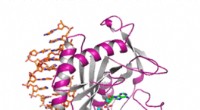
To get a more accurate visual, you can search for "ethylenediaminetetraacetic acid structure" online. Many websites and databases have detailed 3D models that can show the molecule's complex structure.