Here are some of his key ideas about atoms:
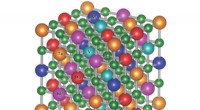
* All matter is composed of atoms and void: Democritus believed that the universe was made of two fundamental components: solid, indivisible particles (atoms) and empty space (void) that allowed the atoms to move.
* Atoms are eternal and unchanging: He believed that atoms were indestructible and never changed, even though they could rearrange themselves to form different substances.
* Atoms are infinitely diverse: Democritus thought that atoms came in an infinite variety of shapes and sizes, which determined the properties of the substances they formed. For example, he believed that water was made of smooth, round atoms, while iron was made of sharp, hooked atoms.
It's important to note that Democritus' ideas were based on philosophical reasoning and speculation, not on scientific experiments. He had no way to observe or measure atoms, and his ideas were largely ignored for centuries.
However, his atomic theory was incredibly influential and laid the foundation for later scientific developments. It wasn't until the 19th century that scientists like John Dalton were able to provide experimental evidence to support the existence of atoms.
Here's a summary of Democritus' atomic theory:
* Matter is made of atoms and void.
* Atoms are indivisible and indestructible.
* Atoms are infinitely diverse in shape and size.
Even though his ideas were purely philosophical, Democritus' insight into the nature of matter was remarkably prescient and contributed significantly to the development of modern atomic theory.