Understanding the Basics:
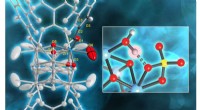
* Sodium phosphate (Na3PO4) is a salt of a weak acid (H3PO4) and a strong base (NaOH). This means that its solutions tend to be slightly basic (pH > 7).
* The pH of a solution is a measure of its hydrogen ion (H+) concentration.
Temperature and pH:
* As temperature increases, the ionization of water increases. This means more H+ ions are released, leading to a slight decrease in pH (i.e., making the solution slightly more acidic).
* The ionization of the weak acid (H3PO4) also increases with temperature. This releases more H+ ions, further contributing to a slight decrease in pH.
Key Considerations:
* The effect of temperature on pH is relatively small for sodium phosphate solutions. The primary factor affecting pH is the concentration of the solution, not the temperature.
* The specific change in pH with temperature depends on the initial concentration of the sodium phosphate solution and the temperature range. For example, a very dilute solution might experience a more noticeable change in pH than a concentrated solution.
* Buffering Capacity: Sodium phosphate solutions exhibit a buffering capacity, meaning they resist significant changes in pH. This is due to the presence of both the phosphate ion (PO43-) and its conjugate acid (HPO42-).
In Summary:
While temperature does have a minor impact on the pH of sodium phosphate solutions, it's usually a secondary effect compared to concentration. The solution will generally become slightly more acidic as temperature increases, but the buffering capacity of the solution helps to minimize this change.