1. Creating the Bond:
* Electron Rich Donor: Lone pairs on electronegative atoms (like oxygen, nitrogen, or fluorine) are electron-rich. They act as electron donors in hydrogen bonding.
* Attraction to Hydrogen: The positive charge on a hydrogen atom attached to a highly electronegative atom (like oxygen in water) creates a partial positive charge on the hydrogen. This partial positive charge is attracted to the electron-rich lone pair on another molecule.
2. Strength and Directionality:
* Stronger than Van der Waals: Hydrogen bonds are stronger than van der Waals forces because they involve a direct interaction between a lone pair and a partially positive hydrogen.
* Directional: The lone pair on the donor atom is attracted specifically to the hydrogen atom, giving hydrogen bonds a strong directional character. This helps to hold molecules together in specific arrangements.
Example: Water
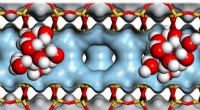
In water (H₂O), the oxygen atom has two lone pairs. These lone pairs can form hydrogen bonds with the partially positive hydrogen atoms on other water molecules. This is what makes water a liquid at room temperature and gives it many of its unique properties, such as high surface tension and a high boiling point.
Summary
Lone pairs are essential for hydrogen bonding. They provide the electron density needed to form a strong, directional interaction with the partially positive hydrogen atoms, contributing to the unique properties of many molecules.