1. Physical Properties:
* Appearance: Table salt is typically fine, white crystals.
* Taste: This is not recommended for an unknown substance, as it could be dangerous.
* Solubility: Table salt dissolves readily in water.
* Test: Add a small amount of the solid to a few drops of water. If it disappears completely, it's likely soluble.
2. Chemical Tests:
* Reaction with Silver Nitrate (AgNO3):
* Procedure: Dissolve a small amount of the solid in water. Add a few drops of silver nitrate solution.
* Result: If a white precipitate (a solid that forms in the solution) forms, it's a strong indication of chloride ions. Table salt contains chloride ions.
* Equation: NaCl (aq) + AgNO3 (aq) → AgCl (s) + NaNO3 (aq)
* Flame Test:
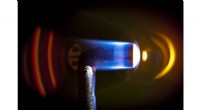
* Procedure: Place a small amount of the solid on a clean wire loop and hold it in a Bunsen burner flame.
* Result: Sodium chloride will produce a bright yellow-orange flame.
* Note: This test can be unreliable for small amounts of impurities.
3. Additional Considerations:
* Other White Solids: Many other compounds are white solids. To be certain, it's crucial to perform multiple tests.
* Safety: Always handle unknown chemicals with caution. Wear safety glasses and gloves. Work in a well-ventilated area.
* Professional Testing: If you have serious doubts about the identity of the substance, it's best to seek the assistance of a qualified chemist or laboratory for proper identification.
Important Disclaimer: These tests are basic and are not definitive proof of the identity of the unknown solid. They provide strong indications but require further analysis for confirmation.