1. Identifying the Charges:
* Cesium (Cs): Cesium is an alkali metal located in Group 1 of the periodic table. It has a tendency to lose one electron to achieve a stable electron configuration. This results in a +1 charge, forming the cesium cation (Cs⁺).
* Phosphorus (P): Phosphorus is a nonmetal located in Group 15 of the periodic table. It has a tendency to gain three electrons to achieve a stable electron configuration. This results in a -3 charge, forming the phosphide anion (P³⁻).
2. Balancing the Charges:
To form a neutral ionic compound, the total positive charge must equal the total negative charge. Since cesium has a +1 charge and phosphorus has a -3 charge, we need three cesium ions for every one phosphide ion:
* 3 (Cs⁺) + 1 (P³⁻) = 0
3. Formation of the Compound:
The positively charged cesium ions (Cs⁺) are attracted to the negatively charged phosphide ions (P³⁻) through electrostatic forces. This strong attraction forms an ionic bond, resulting in the ionic compound cesium phosphide (Cs₃P).
4. Crystal Lattice Structure:
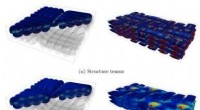
The Cs₃P compound exists as a crystal lattice. The cesium ions and phosphide ions arrange themselves in a specific three-dimensional pattern to maximize electrostatic attractions and minimize repulsions.
In Summary:
The formation of cesium phosphide (Cs₃P) involves the transfer of electrons from cesium atoms to phosphorus atoms, resulting in the formation of positively charged cesium ions (Cs⁺) and negatively charged phosphide ions (P³⁻). These ions then arrange themselves in a crystal lattice held together by strong electrostatic attractions.