Here's why:
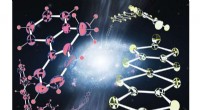
* No discrete molecules: Silicon dioxide exists as a giant covalent structure (network solid), not as individual molecules. The silicon and oxygen atoms are linked together in a continuous three-dimensional network.
* Repeating units: The repeating unit in this network is one silicon atom bonded to four oxygen atoms, and each oxygen atom is shared between two silicon atoms.
* Simplified representation: The empirical formula SiO₂ reflects this repeating unit and represents the simplest ratio of silicon to oxygen atoms within the structure.
It's important to note:
* While the empirical formula is a useful way to represent the composition of silicon dioxide, it doesn't fully describe the complex structure of the compound.
* Other structures can have the same empirical formula. For example, silicon monoxide (SiO) also has the same empirical formula as silicon dioxide, but they are different compounds with distinct properties.
Therefore, using the empirical formula SiO₂ provides a concise and universally recognized way to represent the composition of silicon dioxide, even though it doesn't depict the entire structure.