* Elements are the simplest pure substances that cannot be broken down further by chemical means. They are composed of only one type of atom. Examples include oxygen (O), carbon (C), and iron (Fe).
* Molecules are formed when two or more atoms bond together. These atoms can be of the same element (like oxygen gas, O₂) or different elements (like water, H₂O).
Therefore, it's not accurate to talk about "molecular elements" because elements are defined at the atomic level, while molecules involve multiple atoms.
Here's how you might be using the term incorrectly, and what it might actually refer to:
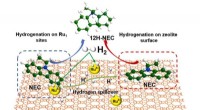
* Diatomic elements: These are elements that naturally exist as molecules containing two atoms of the same element. Examples are oxygen (O₂), nitrogen (N₂), hydrogen (H₂), fluorine (F₂), chlorine (Cl₂), bromine (Br₂), and iodine (I₂). These are sometimes referred to as "molecular elements" in a non-scientific context.
* Polyatomic elements: While less common, some elements can form molecules with multiple atoms of the same element. An example is phosphorus (P₄).
It's important to use precise scientific terminology. When discussing elements, it's best to use terms like "atomic elements" or "diatomic elements" to avoid confusion.