Here's why:
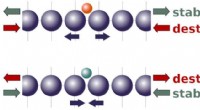
* Ionic compounds are formed by the electrostatic attraction between oppositely charged ions. These ions are created when atoms gain or lose electrons.
* For an atom to gain or lose electrons and become an ion, it must interact with another atom. This interaction involves the transfer of electrons, resulting in at least two elements being involved.
For example:
* Sodium chloride (NaCl): Sodium (Na) loses an electron to become a positively charged ion (Na+), while chlorine (Cl) gains an electron to become a negatively charged ion (Cl-). The attraction between these oppositely charged ions forms the ionic compound sodium chloride.
Therefore, it's impossible to have an ionic compound with only one element because a single element cannot form both positively and negatively charged ions required for the electrostatic attraction that defines ionic bonding.