1. Understand the Concept of Boiling Point Elevation
Boiling point elevation is a colligative property, meaning it depends on the number of solute particles in a solution, not the specific type of solute. The equation for boiling point elevation is:
ΔTb = i * Kb * m
Where:
* ΔTb is the boiling point elevation (2.00 °C in this case)
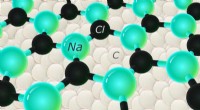
* i is the van't Hoff factor, representing the number of ions a solute dissociates into (NaCl dissociates into 2 ions: Na⁺ and Cl⁻, so i = 2)
* Kb is the molal boiling point elevation constant for water (0.512 °C/m)
* m is the molality of the solution (moles of solute per kilogram of solvent)
2. Solve for Molality (m)
Rearrange the equation to solve for molality:
m = ΔTb / (i * Kb)
m = 2.00 °C / (2 * 0.512 °C/m)
m = 1.953 m
3. Calculate Moles of NaCl
Since molality is moles of solute per kilogram of solvent, we can calculate the moles of NaCl:
moles of NaCl = molality * mass of solvent (in kg)
moles of NaCl = 1.953 m * 1.000 kg
moles of NaCl = 1.953 moles
4. Convert Moles to Grams
Use the molar mass of NaCl (58.44 g/mol) to convert moles to grams:
mass of NaCl = moles of NaCl * molar mass of NaCl
mass of NaCl = 1.953 moles * 58.44 g/mol
mass of NaCl ≈ 114 g
Therefore, approximately 114 grams of NaCl would need to be dissolved in 1.000 kg of water to raise the boiling point by 2.00 degrees Celsius.