Here's the breakdown:
Reaction:
CaCO₃ (s) + H₂CO₃ (aq) → Ca(HCO₃)₂) (aq)
Explanation:
* CaCO₃ (s): This represents solid calcium carbonate, the primary component of limestone.
* H₂CO₃ (aq): This represents carbonic acid dissolved in water. Carbonic acid forms when carbon dioxide (CO₂) from the atmosphere dissolves in rainwater.
* Ca(HCO₃)₂) (aq): This represents calcium bicarbonate dissolved in water. Calcium bicarbonate is soluble and can be carried away by groundwater.
Process:
1. Dissolution: When rainwater containing dissolved carbon dioxide comes into contact with limestone, the carbonic acid reacts with the calcium carbonate.
2. Formation of Calcium Bicarbonate: The reaction produces calcium bicarbonate, which is soluble in water.
3. Dissolution and Transportation: The soluble calcium bicarbonate is carried away by groundwater, leaving behind empty spaces in the limestone.
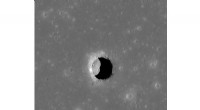
4. Cavity Formation: Over long periods, this process creates cavities, tunnels, and eventually, large caverns within the limestone bedrock.
Important Note: This reaction is an equilibrium reaction. The formation of calcium bicarbonate is favored in the presence of excess carbonic acid. However, if the water becomes saturated with calcium bicarbonate, the reverse reaction can occur, leading to the deposition of calcium carbonate and the formation of stalactites and stalagmites within the caverns.