* Charge Density: Sodium chloride (NaCl) consists of Na+ and Cl- ions. Both ions have a single charge (+1 and -1). Calcium carbonate, on the other hand, has Ca2+ and CO32- ions, with double charges. While higher charges lead to stronger attractions, the size of the ions also plays a role.
* Ionic Size: Sodium and chloride ions are relatively small compared to calcium and carbonate ions. Smaller ions have a higher charge density, meaning the charge is concentrated over a smaller area, leading to stronger electrostatic attractions.
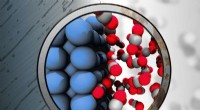
* Lattice Structure: NaCl has a simple cubic lattice structure, which allows for efficient packing of the ions and maximizes electrostatic attractions. Calcium carbonate has a more complex structure, which reduces the overall strength of the ionic bonds.
In summary:
* Higher charge density in NaCl due to smaller ions.
* Simpler lattice structure in NaCl, allowing for closer packing.
These factors contribute to stronger ionic bonds in NaCl compared to calcium carbonate.