Reactants:
* Definition: The substances that go into a chemical reaction. They are the ingredients that will be transformed.
* Location: Written on the left side of a chemical equation.
* Transformation: Reactants undergo chemical change, breaking and forming new bonds.
Products:
* Definition: The substances that are formed as a result of the chemical reaction. They are the new substances created.
* Location: Written on the right side of a chemical equation.
* Transformation: Products have a different composition and properties than the reactants.
Analogy:
Think of baking a cake:
* Reactants: Flour, sugar, eggs, butter, etc. (The ingredients you start with)
* Product: The cake (The new substance formed)
Key Points:
* Conservation of Mass: In a chemical reaction, the total mass of the reactants equals the total mass of the products (Law of Conservation of Mass). Atoms are not created or destroyed, just rearranged.
* Chemical Bonds: Reactants have different chemical bonds than the products. This is what defines the change that has occurred.
Example:
Reactants: Hydrogen (H2) + Oxygen (O2)
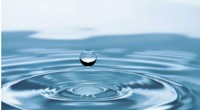
Product: Water (H2O)
Chemical Equation: 2H2 + O2 → 2H2O
In this reaction, hydrogen and oxygen react to form water. The bonds in the hydrogen and oxygen molecules break, and new bonds are formed to create water molecules.