1. Fractional Distillation of Air
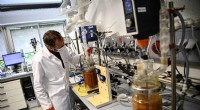
* Process: This is the most common method for large-scale oxygen production. Air is compressed and cooled until it liquefies. The liquefied air is then fractionally distilled, meaning the different components are separated based on their boiling points. Oxygen boils at a higher temperature than nitrogen, so it is collected as a gas.
* Pros: Efficient, large-scale production.
* Cons: Requires significant energy input for liquefaction and distillation.
2. Pressure Swing Adsorption (PSA)
* Process: Air is passed through a bed of adsorbent material (like zeolites) that preferentially adsorbs nitrogen. Oxygen, which is not adsorbed as strongly, passes through and is collected. The adsorbent bed is then regenerated by reducing the pressure, releasing the adsorbed nitrogen.
* Pros: Lower energy consumption than fractional distillation, relatively compact.
* Cons: Produces lower purity oxygen (typically 90-95%), less efficient for large-scale production.
3. Electrolysis of Water
* Process: An electric current is passed through water, causing it to split into its constituent elements, hydrogen and oxygen.
* Pros: Produces very high purity oxygen (up to 99.999%).
* Cons: Requires a significant amount of electricity, relatively expensive.
4. Chemical Reactions
* Process: Certain chemical reactions produce oxygen as a byproduct. For example, heating potassium chlorate (KClO3) produces potassium chloride (KCl) and oxygen gas.
* Pros: Can be used for small-scale oxygen production.
* Cons: Not a sustainable method, can be dangerous if not handled carefully.
5. Membrane Separation
* Process: Air is passed through a membrane that allows oxygen to pass through while blocking other gases.
* Pros: Relatively efficient and compact.
* Cons: Not as efficient as fractional distillation, produces lower purity oxygen (typically 90-95%).
The specific method used for oxygen production depends on the desired purity, the scale of production, and the available resources.