Here's a breakdown of its key properties and characteristics:
Properties:
* Molecular Formula: SF2
* Molecular Weight: 102.07 g/mol
* Appearance: Colorless gas
* Odor: Pungent
* Melting Point: -120.5 °C (-184.9 °F)
* Boiling Point: -29 °C (-20.2 °F)
* Density: 3.8 g/L (at 0 °C and 1 atm)
* Reactivity: Highly reactive, unstable, and prone to decomposition.
Structure:
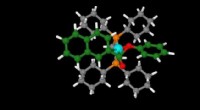
* Shape: V-shaped
* Bonding: Two sulfur-fluorine single bonds (S-F) with a lone pair of electrons on each sulfur atom.
Synthesis:
* SF2 is not readily available commercially and must be synthesized in the laboratory. This is typically achieved through reactions involving sulfur and fluorine gas or by reacting sulfur monochloride (S2Cl2) with silver fluoride (AgF).
Applications:
* Due to its instability and reactivity, SF2 has limited applications.
* It's primarily used as a reagent in laboratory synthesis and research, particularly in the study of fluorine chemistry.
Safety:
* SF2 is a highly toxic and corrosive compound.
* It should be handled with extreme care in well-ventilated areas, and appropriate safety precautions should always be followed.
It's important to note that while disulfur tetrafluoride is an interesting and reactive compound, its instability and toxicity limit its practical applications. It's mainly used in research and specific laboratory settings.