Here's how it works:
* Sodium polyacrylate is a polymer with a highly porous structure. It contains many carboxylate groups (-COO-) which have a strong affinity for water molecules.
* Water molecules are attracted to these carboxylate groups due to hydrogen bonding.
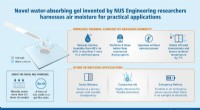
* When sodium polyacrylate is exposed to water, the water molecules are absorbed into the polymer's structure. This process causes the polymer to swell significantly, forming a gel-like substance.
Key Points:
* No new chemical species are formed. The chemical composition of both sodium polyacrylate and water remains the same.
* The process is reversible. If the gel is allowed to dry, the water molecules will be released, and the sodium polyacrylate will return to its original form.
* The absorption capacity is high. Sodium polyacrylate can absorb many times its weight in water, making it useful for various applications like diapers, superabsorbent polymers, and water retention in soil.
Therefore, while sodium polyacrylate and water interact in a significant way, it's not a chemical reaction but a physical process of absorption.