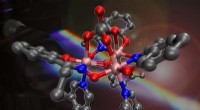
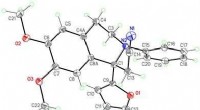
* Chemical bonding: When elements combine to form a compound, they undergo chemical bonding. This involves the sharing or transfer of electrons, which changes the way atoms interact with each other. The resulting compound has a completely new arrangement of electrons, leading to different properties.
* Properties: Compounds have distinct physical and chemical properties that are often vastly different from the elements they contain. For example:
* Sodium (Na) is a highly reactive metal, while chlorine (Cl) is a toxic, yellowish-green gas. When they combine, they form sodium chloride (NaCl), commonly known as table salt, which is a white, crystalline solid and is essential for human health.
* Water (H₂O) is a liquid at room temperature and is essential for life. It is formed from the highly flammable gas hydrogen (H₂) and the highly reactive gas oxygen (O₂) .
* Emergent properties: The properties of a compound are not just a simple sum of the properties of its constituent elements. They are emergent properties, meaning they arise from the interactions between the atoms within the compound.
In summary: Compounds are entirely new entities with unique properties that are often significantly different from the elements that compose them. This difference arises from the way elements bond together and the new emergent properties that result.