Here's a breakdown:
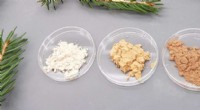
* Anhydrous Copper Sulfate (CuSO₄): White, powdery solid.
* Water (H₂O): Clear, colorless liquid.
* Copper(II) Sulfate Pentahydrate (CuSO₄·5H₂O): Blue, crystalline solid.
The reaction is reversible, meaning you can dehydrate the blue copper sulfate pentahydrate by heating it, turning it back into the white anhydrous form.
Essentially, the color change is due to the formation of the hydrated copper sulfate, which has a different structure and absorbs light differently than the anhydrous form.