1. Repulsion at Short Distances:
* Electron Cloud Overlap: As the atoms get very close, their electron clouds start to overlap. This overlap leads to repulsion between the negatively charged electrons.
* Strong Repulsive Force: This repulsive force is strong and prevents the atoms from getting any closer. It's like trying to push two magnets together with the same poles facing each other.
2. Weak Attraction at Intermediate Distances:
* Van der Waals Forces: At slightly larger distances, weak attractive forces, known as Van der Waals forces, can exist between the atoms. These forces arise from temporary fluctuations in electron distribution around the atoms.
* Weak Attraction: This attraction is relatively weak compared to the repulsive force at shorter distances.
3. Bonding at Optimal Distance:
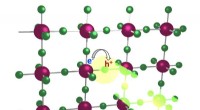
* Metallic Bonding: If the atoms have enough energy to overcome the initial repulsive force, they can form a metallic bond. This involves the sharing of valence electrons between the atoms, creating a "sea" of delocalized electrons.
* Formation of Sodium Metal: In the case of sodium, this bonding leads to the formation of solid sodium metal.
In summary:
* At very short distances, strong repulsion dominates.
* At intermediate distances, weak attraction due to Van der Waals forces exists.
* At an optimal distance, metallic bonding can occur, leading to the formation of sodium metal.
Note: The specific outcome depends on the energy of the atoms and the specific conditions (temperature, pressure, etc.).