Visual Observations:
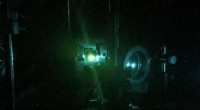
* Vigorous reaction: The reaction is highly exothermic, meaning it releases a significant amount of heat.
* Bright orange-yellow flame: The reaction produces a bright orange-yellow flame as a result of the excited sodium atoms emitting light.
* White smoke: Fine white smoke, which is actually tiny particles of solid sodium chloride, is produced as the reaction progresses.
* Formation of a white solid: The white smoke eventually settles down as a white solid mass, which is sodium chloride.
Chemical Observations:
* Change in properties: The reaction involves the complete change of properties of the reactants. Sodium, a soft, silvery metal, and chlorine, a green-yellow gas, combine to form a white, crystalline solid.
* Ionic bonding: The reaction forms an ionic bond between the sodium and chlorine atoms. The sodium atom loses an electron to form a positively charged ion (Na+), and the chlorine atom gains an electron to form a negatively charged ion (Cl-). These oppositely charged ions are attracted to each other, forming the stable sodium chloride compound.
Safety:
* Caution: This reaction is highly exothermic and should be performed with extreme caution. It's best to observe this reaction demonstrated by a trained professional in a safe environment.
* Safety equipment: Appropriate safety equipment, including goggles and gloves, should always be used when handling these substances.
In summary:
The reaction between sodium and chlorine is a dramatic and visually exciting chemical reaction that demonstrates the formation of an ionic compound and the release of significant energy.