1. Diffraction Techniques:
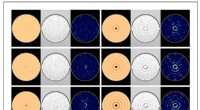
* X-ray Diffraction (XRD): This is the most widely used method. X-rays are directed at the solid, and the scattered beams create a diffraction pattern. The pattern is analyzed to reveal the arrangement of atoms within the crystal lattice.
* Advantages: Versatile, provides detailed structural information, can be used for both single crystals and powders.
* Disadvantages: Requires a crystalline material, can be limited by sample size and quality.
* Neutron Diffraction: Similar to XRD, but neutrons are used instead of X-rays. Neutrons interact differently with atoms, making them particularly useful for studying lighter elements, magnetic structures, and materials with high symmetry.
* Electron Diffraction: Used for studying very small crystals or thin films. Electrons have a much shorter wavelength than X-rays, providing higher resolution.
2. Microscopy:
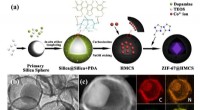
* Transmission Electron Microscopy (TEM): Allows for direct imaging of the internal structure of a material at atomic scale. TEM can provide information about crystal defects, grain boundaries, and other microstructural features.
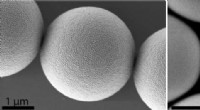
* Scanning Electron Microscopy (SEM): Provides images of the surface of a material, revealing information about its topography and composition. While not directly revealing crystal structure, SEM can be used to identify different phases and grain sizes.
3. Spectroscopic Techniques:
* Nuclear Magnetic Resonance (NMR): Can be used to determine the arrangement of atoms in a molecule, providing information about the crystal structure.
* Raman Spectroscopy: Provides information about the vibrations of molecules in a crystal, which can be used to identify different phases and structural changes.
4. Other Techniques:
* Density Measurement: Can be used to determine the packing efficiency of atoms in a crystal lattice.
* Thermal Analysis: Techniques like Differential Scanning Calorimetry (DSC) can be used to identify phase transitions in a solid, which are often associated with changes in crystal structure.
Steps Involved in Determining Crystal Structure:
1. Sample Preparation: The solid must be properly prepared for the chosen analysis technique. This may involve grinding the sample into a powder, preparing thin films, or cutting a single crystal.
2. Data Acquisition: The chosen technique is used to collect data on the sample.
3. Data Analysis: The collected data is analyzed to extract information about the crystal structure. This often involves complex mathematical algorithms and software.
4. Model Refinement: The initial model of the crystal structure is refined to better fit the experimental data.
5. Interpretation: The refined model is interpreted to provide information about the arrangement of atoms within the crystal lattice.
Important Considerations:
* Purity of the sample: Impurities can affect the diffraction pattern and lead to incorrect structural determination.
* Sample Size: Sufficiently large and well-defined crystals are often required for successful diffraction analysis.
* Choice of Technique: The choice of technique depends on the specific properties of the material being studied.
Determining the crystal structure of a solid can be a complex process. However, the knowledge gained is invaluable for understanding material properties and developing new materials with desired characteristics.