Here's how it works:
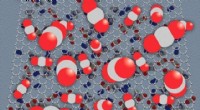
* Hydrolysis involves the reaction of water molecules with minerals in rocks.
* Water molecules can break apart the chemical bonds within minerals, causing them to decompose.
* This process can lead to the formation of new minerals, the weakening of the rock, and ultimately, its breakdown.
Examples of hydrolysis in action:
* Feldspar weathering: Feldspar is a common mineral in many rocks. When water reacts with feldspar, it can break it down into clay minerals.
* Carbonation: When carbon dioxide dissolves in water, it forms carbonic acid. Carbonic acid can react with minerals like calcite (found in limestone and marble) to form soluble calcium bicarbonate, which can then be dissolved away.
Let me know if you'd like more details on any specific aspect of hydrolysis!