Group 7 elements, also known as halogens, share several distinct chemical properties due to their similar electronic configurations:
1. Highly Reactive Nonmetals:
* High electronegativity: Halogens have a strong tendency to attract electrons due to their high electronegativity. This makes them highly reactive.
* Form anions easily: They readily gain one electron to form negatively charged ions (halide ions) with a stable noble gas configuration.
* Reacts with metals to form ionic compounds: Halogens react readily with metals to form ionic compounds, such as NaCl (sodium chloride) or AgBr (silver bromide).
2. Oxidation States:
* Most common oxidation state: Halogens typically exhibit a -1 oxidation state in their compounds.
* Other oxidation states: Fluorine, the most electronegative element, only exists in a -1 oxidation state. However, other halogens can exhibit positive oxidation states in compounds with more electronegative elements like oxygen.
3. Diatomic Nature:
* Exist as diatomic molecules: Halogens exist as diatomic molecules (e.g., Cl₂, Br₂) in their elemental form due to their strong tendency to form a covalent bond with another atom of the same element to achieve stability.
4. Reactivity Trends:
* Decreasing reactivity down the group: Reactivity decreases as you move down the group from fluorine to iodine. This is because atomic size increases, and the outermost electron is further away from the nucleus, making it less attractive to another atom.
* Fluorine is the most reactive: Fluorine is the most reactive halogen due to its small size, high electronegativity, and weak bond strength in the F₂ molecule.
5. Color and Physical State:
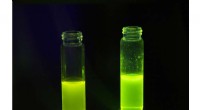
* Color: Halogens exhibit distinct colors in their elemental state. For example, fluorine is pale yellow, chlorine is greenish-yellow, bromine is reddish-brown liquid, and iodine is a dark purple solid.
* Physical state: The physical state of halogens changes down the group from gases (F₂, Cl₂) to liquids (Br₂) and solids (I₂).
6. Reactions with Hydrogen:
* Form hydrogen halides: Halogens react with hydrogen to form hydrogen halides (HF, HCl, HBr, HI), which are colorless, acidic gases.
7. Reactions with Nonmetals:
* Form covalent compounds: Halogens react with other nonmetals to form covalent compounds, often with multiple oxidation states.
8. Disproportionation:
* Halogens undergo disproportionation: Halogens can undergo disproportionation reactions where the same element is both oxidized and reduced.
9. Uses:
* Important in various industries: Halogens and their compounds are used in various industries, including pharmaceuticals, agriculture, and plastics.
* Essential for human life: Halogens like chlorine are essential for water purification and disinfection, while iodine is crucial for thyroid hormone production.
These are some of the key chemical properties of group 7 elements (halogens). Understanding these properties is crucial for predicting their reactivity and understanding their various applications.