NH₃(aq) + HNO₃(aq) → NH₄NO₃(aq)
Here's a breakdown:
* NH₃(aq): Ammonia dissolved in water (aqueous solution)
* HNO₃(aq): Nitric acid dissolved in water (aqueous solution)
* NH₄NO₃(aq): Ammonium nitrate dissolved in water (aqueous solution)
Explanation:
* Ammonia (NH₃) is a weak base, meaning it accepts protons (H⁺).
* Nitric acid (HNO₃) is a strong acid, meaning it readily donates protons (H⁺).
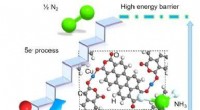
* When they react, the proton from HNO₃ is transferred to the ammonia molecule, forming the ammonium ion (NH₄⁺).
* The remaining nitrate ion (NO₃⁻) combines with the ammonium ion, resulting in the formation of ammonium nitrate (NH₄NO₃).
This reaction is an example of an acid-base neutralization reaction, where the acid and base react to form a salt (ammonium nitrate) and water. The water is not explicitly shown in the equation because it is already present in the solutions.