Here are some key details about gas hydrates:
* Formation: They form under specific conditions of high pressure and low temperature, typically found in deep ocean sediments, permafrost regions, and even some geological formations.
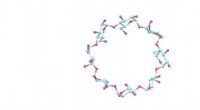
* Composition: The most common type of gas hydrate is methane hydrate, where methane gas is trapped within the water structure. However, other gases like ethane, propane, and carbon dioxide can also form hydrates.
* Appearance: Gas hydrates appear as white, crystalline solids, similar in appearance to ice.
* Potential Energy Source: Methane hydrates are considered a potential source of energy due to the vast quantities of methane they contain. However, extracting methane from hydrates poses significant technological and environmental challenges.
* Geological Importance: Gas hydrates play a role in stabilizing seafloor sediments, and their formation and dissociation can influence geological processes.
* Climate Impact: Dissociation of gas hydrates can release large amounts of methane into the atmosphere, which is a potent greenhouse gas. This could potentially exacerbate climate change.
Here are some additional points:
* Global Distribution: Gas hydrates are found globally, particularly in areas like the Arctic, the Gulf of Mexico, and off the coast of Japan.
* Research: There is ongoing research into the formation, properties, and potential applications of gas hydrates.
Gas hydrates are a fascinating and complex phenomenon with significant implications for energy, geology, and climate change.