* Rock salt is primarily sodium chloride (NaCl). To get sodium hydroxide, you need to transform the chloride ion (Cl-) into a hydroxide ion (OH-).
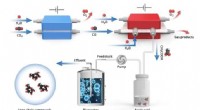
* Electrolysis is the key: Sodium hydroxide is produced through the electrolysis of brine (a concentrated solution of sodium chloride).
* The process: During electrolysis, an electric current is passed through the brine solution. This breaks down the NaCl into sodium ions (Na+) and chloride ions (Cl-). At the cathode (negative electrode), water molecules are reduced, producing hydroxide ions (OH-) and hydrogen gas (H2). At the anode (positive electrode), chloride ions are oxidized, producing chlorine gas (Cl2).
Therefore, while rock salt is the starting material, it's not directly transformed into sodium hydroxide. The process involves a chemical transformation through electrolysis.