Understanding Solubility
* CuSO₄ (Copper(II) sulfate): This is typically soluble in water, forming an aqueous solution (aq).
* KOH (Potassium hydroxide): This is also very soluble in water, forming an aqueous solution (aq).
* Cu(OH)₂ (Copper(II) hydroxide): This is generally insoluble in water and will precipitate out as a solid (s).
* K₂SO₄ (Potassium sulfate): This is highly soluble in water and forms an aqueous solution (aq).
The Reaction
The balanced chemical equation with states is:
CuSO₄ (aq) + 2KOH (aq) → Cu(OH)₂ (s) + K₂SO₄ (aq)
Explanation
When aqueous solutions of copper(II) sulfate and potassium hydroxide are mixed, the following happens:
1. Double displacement: The copper(II) ions (Cu²⁺) from CuSO₄ react with the hydroxide ions (OH⁻) from KOH to form copper(II) hydroxide, Cu(OH)₂.
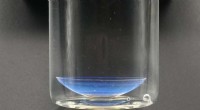
2. Precipitation: Since Cu(OH)₂ is insoluble in water, it forms a solid precipitate that settles out of the solution.
3. Formation of potassium sulfate: The remaining potassium ions (K⁺) from KOH and sulfate ions (SO₄²⁻) from CuSO₄ combine to form soluble potassium sulfate, K₂SO₄, which remains in solution.
Let me know if you have any other chemistry questions!