* Bromine is less reactive than chlorine: Chlorine is a stronger oxidizing agent than bromine. This means chlorine has a greater tendency to gain electrons and be reduced.
* The halogens follow the trend of decreasing reactivity down the group: Fluorine is the most reactive, followed by chlorine, bromine, and iodine.
* No displacement reaction: In order for a reaction to occur, bromine would need to displace chlorine from NaCl. However, bromine is less reactive and cannot displace chlorine.
Therefore, the mixture will remain as separate aqueous solutions of bromine and sodium chloride.
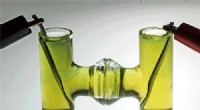
Possible observation: The solution will likely have a yellow-brown color due to the presence of bromine.
Note: While no significant reaction occurs, if you were to expose the solution to sunlight or UV light, a small amount of chlorine gas could be produced. This is because sunlight can provide enough energy to overcome the energy barrier for a reaction to occur. However, this reaction is very slow and unlikely to be noticeable under normal conditions.