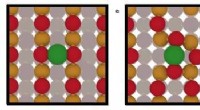
Ionic Compounds
* High Melting Points: Ionic compounds generally have very high melting points (often above 300°C).
* Strong Electrostatic Attractions: The strong electrostatic attractions between oppositely charged ions (ionic bonds) require a significant amount of energy to overcome.
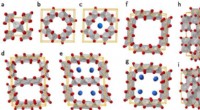
* Crystalline Structure: Ionic compounds form a rigid, crystalline lattice structure where ions are tightly packed together. This structure further strengthens the interionic forces.
Molecular Compounds
* Lower Melting Points: Molecular compounds typically have much lower melting points compared to ionic compounds.
* Weaker Intermolecular Forces: The forces holding molecules together (like hydrogen bonds, dipole-dipole interactions, and London dispersion forces) are weaker than ionic bonds. These forces are easier to overcome, resulting in lower melting points.
* Variable Structures: Molecular compounds have various structures, from simple linear shapes to complex three-dimensional forms. This structural variability can influence their melting points.
Key Differences in a Nutshell:
* Bond Strength: Ionic bonds are much stronger than the intermolecular forces found in molecular compounds.
* Lattice Structure: Ionic compounds have a strong, rigid lattice structure, while molecular compounds have more varied and less rigid structures.
Examples:
* Ionic: Sodium chloride (NaCl), which has a melting point of 801°C.
* Molecular: Water (H₂O), which has a melting point of 0°C.
Exceptions:
While the general trends hold true, there are exceptions. Some molecular compounds, like diamond (a network covalent solid), have extremely high melting points due to the strong covalent bonds within their structures.