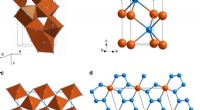
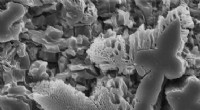
* Salt (NaCl) is a crystal: The structure of salt is a repeating lattice of sodium (Na) and chloride (Cl) ions. The size and shape of a grain of salt can vary greatly.
* Avogadro's number: To calculate the number of molecules, we need to know the number of moles of salt. One mole of NaCl contains Avogadro's number of molecules (6.022 x 10^23).
Here's how you could estimate it:
1. Weigh the grain of salt: Use a precise scale to measure the mass of your grain of salt in grams.
2. Calculate moles:
* The molar mass of NaCl is approximately 58.44 g/mol.
* Divide the mass of your grain by the molar mass to find the number of moles.
3. Multiply by Avogadro's number: Multiply the number of moles you calculated by Avogadro's number (6.022 x 10^23) to get the estimated number of molecules.
Example:
Let's say your grain of salt weighs 0.001 grams.
* Moles of NaCl: 0.001 g / 58.44 g/mol = 1.71 x 10^-5 mol
* Number of molecules: 1.71 x 10^-5 mol * 6.022 x 10^23 molecules/mol ≈ 1.03 x 10^19 molecules
Remember: This is just an estimate, and the actual number of molecules will vary depending on the size of your grain.