Ionic Compounds:
* Bonding: Ionic compounds are formed by the electrostatic attraction between oppositely charged ions (cations and anions).
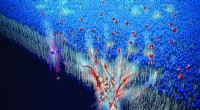
* Dissolution: When an ionic compound dissolves in water, the polar water molecules surround the ions, separating them from the crystal lattice. The positive end of the water molecule (hydrogen) attracts the anions, while the negative end (oxygen) attracts the cations. This process is called hydration.
* Conductivity: Aqueous solutions of ionic compounds are good conductors of electricity because the dissolved ions are free to move and carry an electric charge.
* Examples: NaCl (table salt), KBr, CaCl2
Molecular Compounds:
* Bonding: Molecular compounds are formed by the sharing of electrons between atoms, creating covalent bonds.
* Dissolution: Whether a molecular compound dissolves in water depends on its polarity. Polar molecular compounds (like sugar) can dissolve in water because they can form hydrogen bonds with water molecules. Nonpolar molecular compounds (like oil) do not dissolve in water because they lack the ability to form strong interactions with water molecules.
* Conductivity: Aqueous solutions of molecular compounds are generally poor conductors of electricity, unless the compound undergoes ionization in water, like acids and bases.
* Examples: Glucose (C6H12O6), ethanol (C2H5OH), methane (CH4)
Key Differences:
| Feature | Ionic Compounds | Molecular Compounds |
|---|---|---|
| Bonding | Electrostatic attraction between ions | Sharing of electrons (covalent bonds) |
| Dissolution | Generally soluble in water due to ion-dipole interactions | Solubility depends on polarity; polar compounds dissolve well, nonpolar compounds do not |
| Conductivity | Good conductors of electricity in aqueous solutions | Poor conductors unless they undergo ionization in water |
| Examples | NaCl, KBr, CaCl2 | Glucose, ethanol, methane |
In summary:
* Ionic compounds dissolve in water by hydration, forming free ions that make the solution conductive.
* Molecular compounds dissolve in water based on polarity, and only those that can form strong interactions with water molecules will dissolve. Their solutions are usually poor conductors.
This difference in behavior is essential to understanding the properties of various solutions and their applications in chemistry and biology.