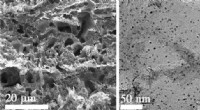
1. Deposition of CO2 as a solid:
This refers to the process where carbon dioxide (CO2) transitions directly from a gaseous state to a solid state, skipping the liquid phase. This phenomenon is known as sublimation and occurs under specific conditions of low temperature and high pressure.
In this context, "deposition" would refer to the formation of solid CO2, also known as "dry ice," from the atmosphere. This process is less common than other forms of CO2 removal but can occur naturally in extreme environments like the polar regions.
2. Deposition of CO2 in geological formations:
This refers to the storage of CO2 in underground geological formations, often as a liquid or supercritical fluid. This process is a key component of carbon capture and storage (CCS), a technology aimed at mitigating climate change by removing CO2 from the atmosphere and storing it safely underground.
Examples of geological formations suitable for CO2 deposition:
* Depleted oil and gas reservoirs: These formations have the necessary porosity and permeability to store large volumes of CO2.
* Saline aquifers: These underground formations contain saline water and can hold substantial amounts of CO2.
* Unmineable coal seams: These seams can be used for CO2 storage due to their high porosity and the presence of coal, which can react with CO2 to form stable carbonates.
Therefore, the precise meaning of "deposition of CO2" depends on the context. It can refer to the formation of dry ice through sublimation or the storage of CO2 underground in geological formations for carbon capture and storage.