1. Oxidation of Phenol by Hydrogen Peroxide:
* In the presence of an oxidizing agent like H₂O₂, phenol is oxidized to a quinoneimine derivative.
2. Reaction with 4-aminoantipyrine:
* The quinoneimine derivative reacts with 4-AAP to form a colored quinoneimine dye.
Overall reaction:
* H₂O₂ + phenol + 4-AAP → Quinoneimine dye + H₂O
Mechanism:
The reaction mechanism is complex and involves several steps, but the key points are:
1. Formation of a phenoxyl radical: H₂O₂ oxidizes phenol to a phenoxyl radical.
2. Reaction with 4-AAP: The phenoxyl radical reacts with 4-AAP to form a resonance-stabilized intermediate.
3. Oxidation and ring closure: The intermediate is oxidized by H₂O₂ to form the quinoneimine dye, which undergoes ring closure.
Colorimetric Detection:
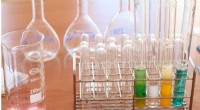
The quinoneimine dye produced is highly colored, typically red-orange, with an absorbance maximum in the visible region. This allows for the quantitative determination of H₂O₂ by measuring the absorbance of the solution at a specific wavelength using a spectrophotometer.
Factors Affecting the Reaction:
* pH: The reaction is typically performed at a pH of 10.0-10.5 using a buffer solution.
* Temperature: The reaction rate increases with increasing temperature.
* Catalyst: Certain metal ions, such as copper and iron, can catalyze the reaction.
* Interference: The presence of other oxidizing agents or reducing agents can interfere with the reaction.
Applications:
This reaction is widely used for:
* Determining the concentration of hydrogen peroxide in various samples, such as biological fluids, environmental samples, and industrial processes.
* Monitoring the activity of enzymes that produce or consume H₂O₂, such as catalase.
* Detecting the presence of H₂O₂ in food and beverages.
Note: This is a simplified explanation. The exact mechanism and reaction conditions may vary depending on the specific application and reagents used.