Hydrogen bonds are a type of weak chemical bond that plays a crucial role in many biological processes. They are responsible for holding together molecules like water and proteins, and even influence the structure of DNA.
Here's a breakdown:
* What they are: Hydrogen bonds form between a hydrogen atom (H) that is covalently bonded to a highly electronegative atom (like oxygen, nitrogen, or fluorine), and a lone pair of electrons on another electronegative atom.
* Why they form: The electronegative atom attracts the shared electrons in the covalent bond, creating a partial positive charge on the hydrogen atom and a partial negative charge on the electronegative atom. This difference in charge creates an attractive force between the positively charged hydrogen and the negatively charged lone pair.
* Strength: Hydrogen bonds are weaker than covalent bonds, but stronger than van der Waals forces. They are often described as "sticky notes" that hold molecules together.
* Importance:
* Water: Hydrogen bonds are responsible for water's unique properties, including its high boiling point, surface tension, and ability to act as a solvent.
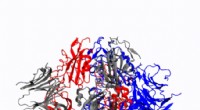
* Proteins: Hydrogen bonds help to maintain the three-dimensional structure of proteins, which is essential for their function.
* DNA: Hydrogen bonds hold the two strands of DNA together, allowing for the copying and transmission of genetic information.
* Other molecules: Hydrogen bonds are also important in holding together carbohydrates, lipids, and other biological molecules.
In simple terms: Imagine a hydrogen bond as a little magnet holding two molecules together. It's not as strong as a super glue bond, but it's still important for keeping things in place.
Here's an analogy: Think of a classroom full of students. The desks represent molecules, and the students represent the atoms within those molecules. The hydrogen bonds are like the magnets holding the desks together, making sure they stay organized and don't fall apart.