1. Higher Electronegativity Difference:
* Oxygen is more electronegative than nitrogen. This means oxygen attracts electrons more strongly, creating a larger partial negative charge (δ-) on the oxygen atom in water.
* This larger charge difference leads to stronger dipole-dipole interactions between water molecules, making the hydrogen bonds stronger.
2. More Hydrogen Bond Acceptors:
* Each water molecule has two lone pairs of electrons on the oxygen atom. This means each water molecule can form two hydrogen bonds as an acceptor.
* Ammonia, on the other hand, only has one lone pair on the nitrogen atom, limiting its hydrogen bonding capacity as an acceptor to one.
3. Geometry:
* The bent shape of the water molecule allows for more efficient hydrogen bonding. The hydrogen atoms are positioned so that they can form strong interactions with the lone pairs on neighboring oxygen atoms.
* The trigonal pyramidal shape of ammonia makes hydrogen bonding slightly less efficient.
In summary: The stronger electronegativity of oxygen, the greater number of lone pairs in water, and its favorable geometry all contribute to stronger hydrogen bonding in water compared to ammonia.
Consequences of Stronger Hydrogen Bonding in Water:
* Higher boiling point: Water has a much higher boiling point than ammonia, due to the energy required to break the strong hydrogen bonds.
* Higher surface tension: Water has a higher surface tension than ammonia, making it more cohesive.
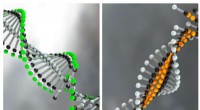
* Important biological role: Hydrogen bonding in water is crucial for life, as it plays a role in protein folding, DNA structure, and many other biological processes.