Here's why:
* Electronegativity: Oxygen (O) is more electronegative than nitrogen (N), meaning it attracts electrons more strongly. This creates a larger difference in electronegativity between the central atom and the hydrogen atoms in water compared to ammonia.
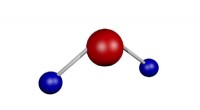
* Molecular Geometry: Water has a bent molecular geometry due to the two lone pairs of electrons on the oxygen atom, while ammonia has a trigonal pyramidal geometry. This bent shape in water enhances the polarity by concentrating the negative charge towards the oxygen atom.
* Dipole Moment: The larger difference in electronegativity and the bent geometry of water lead to a higher dipole moment (a measure of polarity) compared to ammonia.
In summary:
* Water has a larger difference in electronegativity between oxygen and hydrogen.
* Water's bent geometry further enhances its polarity.
* As a result, water has a higher dipole moment and is more polar than ammonia.