Here's why:
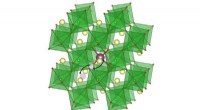
* Tetrahedra: Olivine's basic building block is the silica tetrahedron (SiO4). This tetrahedron consists of a silicon atom at the center, surrounded by four oxygen atoms at the corners.
* Isolation: These tetrahedra are not linked to each other directly.
* Linking: The tetrahedra are linked by cations like magnesium (Mg) and iron (Fe). These cations sit between the tetrahedra and are bonded to the oxygen atoms of the tetrahedra. This creates a three-dimensional structure.
Other Examples:
While olivine is the most common example, other minerals with this structure include:
* Garnet: Garnets also have isolated silica tetrahedra linked by cations like calcium, magnesium, iron, manganese, and aluminum.
* Zircon: This mineral features isolated silicate tetrahedra linked by zirconium and oxygen.
Let me know if you'd like to explore other mineral structures!