Colligative Properties and Dissociation
Colligative properties are properties of solutions that depend on the *number* of solute particles present, not their chemical identity. These properties include:
* Vapor pressure lowering: The vapor pressure of a solution is lower than that of the pure solvent.
* Boiling point elevation: The boiling point of a solution is higher than that of the pure solvent.
* Freezing point depression: The freezing point of a solution is lower than that of the pure solvent.
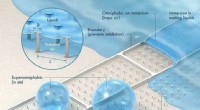
* Osmotic pressure: The pressure required to prevent the flow of solvent across a semipermeable membrane.
Ionic vs. Molecular Compounds
* NaCl (Sodium Chloride): An ionic compound that dissociates completely into its ions when dissolved in water. One mole of NaCl produces 2 moles of ions (1 mole of Na+ and 1 mole of Cl-).
* Sucrose (C12H22O11): A molecular compound that does not dissociate into ions when dissolved in water. One mole of sucrose remains as one mole of molecules.
The Impact on Colligative Properties
Since NaCl dissociates into more particles than sucrose, it has a greater effect on colligative properties. Here's why:
* More Particles, Greater Change: The change in colligative properties is directly proportional to the number of solute particles. More particles in solution lead to a larger change in vapor pressure, boiling point, freezing point, and osmotic pressure.
* Van't Hoff Factor: The van't Hoff factor (i) accounts for the number of particles a solute produces in solution. For NaCl, i = 2; for sucrose, i = 1.
Example: Freezing Point Depression
Let's consider freezing point depression:
* A 1 molal solution of NaCl will have a freezing point depression twice as large as a 1 molal solution of sucrose, because NaCl produces twice the number of particles.
In Summary
NaCl, due to its ionic nature and complete dissociation, produces more particles in solution than sucrose. This higher particle concentration leads to a greater change in colligative properties.