Method: Evaporation
1. Heat the Solution: Gently heat the solution in a beaker or evaporating dish. The water will evaporate faster than the copper chloride.
2. Crystallization: As the water evaporates, the concentration of copper chloride increases. Eventually, the solution becomes saturated, and the copper chloride will start to crystallize out of the solution.
3. Collect the Crystals: Once most of the water has evaporated, you will be left with solid copper chloride crystals. You can carefully collect these crystals.
Important Considerations:
* Safety: Copper chloride is an irritant. Wear appropriate safety gear, such as gloves and goggles, when handling the solution.
* Heat: Be careful not to heat the solution too quickly or too strongly. This can cause the solution to splatter or the copper chloride to decompose.
* Purity: This method is likely to produce some impurities in the copper chloride crystals. You can re-dissolve and re-crystallize the copper chloride to further purify it.
Alternative Method (Electrolysis):
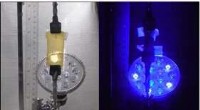
For a more controlled separation, you could use electrolysis. This involves passing an electric current through the solution, which causes the copper ions (Cu²⁺) to be reduced to copper metal at the cathode and the chloride ions (Cl⁻) to be oxidized to chlorine gas at the anode.
Electrolysis is a more complex process and requires specialized equipment.
Let me know if you'd like a more detailed explanation of the electrolysis method!