Physical Characteristics:
* Lightest element: It's the smallest and lightest element on the periodic table with an atomic weight of 1.008.
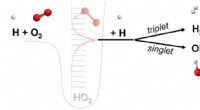
* Highly flammable: Hydrogen is extremely flammable and burns with a pale blue flame, creating water as a byproduct.
* Colorless, odorless, and tasteless: In its gaseous state, hydrogen is invisible and has no discernible smell or taste.
* Exists in three forms: It can exist as a gas (H2), a liquid (LH2), and a solid (SH2).
* High energy density: Hydrogen has a high energy density per unit mass, making it a promising energy carrier.
Chemical Characteristics:
* Highly reactive: Hydrogen is highly reactive and readily forms chemical bonds with other elements.
* Can exist as a cation (H+) or an anion (H-): It can form both positive and negative ions.
* Forms strong covalent bonds: Hydrogen forms strong covalent bonds with many elements, including carbon, oxygen, and nitrogen.
* Abundant in the universe: It is the most abundant element in the universe, making up about 75% of its mass.
Other Important Characteristics:
* Potential for clean energy: Hydrogen is considered a clean energy source because its combustion only produces water, with no carbon emissions.
* Versatile application: Hydrogen has a wide range of applications, including fuel cells, ammonia production, rocket fuel, and food processing.
Challenges and Considerations:
* Safety: Hydrogen's flammability and explosive potential require careful handling and storage.
* Production and storage: Producing and storing hydrogen efficiently and cost-effectively remains a challenge.
* Infrastructure: Developing a robust hydrogen infrastructure is crucial for its widespread adoption.
Overall, hydrogen is a fascinating and essential element with a wide range of potential applications. Its unique characteristics make it a promising candidate for various technological advancements, particularly in the field of clean energy.