Intermolecular hydrogen bonds are a specific type of dipole-dipole interaction that occurs between molecules. They are stronger than typical dipole-dipole interactions and even stronger than London dispersion forces.
Here's a breakdown:
* What is a hydrogen bond? It's an attraction between a hydrogen atom covalently bonded to a highly electronegative atom (like oxygen, nitrogen, or fluorine) and a lone pair of electrons on another electronegative atom.
* Intermolecular means that the bond occurs between different molecules, not within the same molecule.
* Why are they strong? The electronegative atom pulls the shared electron pair in the covalent bond closer to itself, leaving the hydrogen atom with a partial positive charge (δ+). The lone pair on the other electronegative atom has a partial negative charge (δ-). This strong electrostatic attraction between the δ+ and δ- creates the hydrogen bond.
Key Characteristics:
* Directional: Hydrogen bonds are directional and form in a specific orientation, creating a linear shape.
* Weak compared to covalent bonds: While strong among intermolecular forces, hydrogen bonds are much weaker than covalent bonds.
* Crucial for life: They play a vital role in numerous biological processes, including:
* Water properties: High boiling point, high surface tension, excellent solvent properties
* Protein structure: Stabilizing the 3D structure of proteins
* DNA structure: Holding the two strands of DNA together
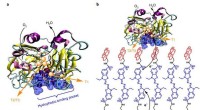
* Enzymes: Providing specificity and catalytic activity
Examples:
* Water: Hydrogen bonds form between the oxygen atom of one water molecule and the hydrogen atom of another.
* DNA: Hydrogen bonds connect the base pairs (adenine-thymine and guanine-cytosine) in DNA.
* Proteins: Hydrogen bonds help to fold and maintain the 3D structure of proteins.
In short: Intermolecular hydrogen bonds are strong attractions between molecules, crucial for many biological and chemical processes. They arise from the unique interaction between a hydrogen atom with a partial positive charge and a lone pair of electrons on an electronegative atom.