Here's why:
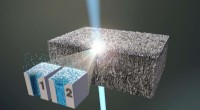
* Metallic luster refers to the way a mineral reflects light, similar to how a polished metal surface does. It's characterized by being opaque (light doesn't pass through), and often appearing as a bright, reflective surface.
* Shiny is a general term that describes how light reflects from a surface. While many minerals with metallic luster are shiny, not all shiny minerals have a metallic luster.
Examples of minerals with metallic luster:
* Pyrite (Fool's Gold)
* Galena
* Graphite
* Chalcopyrite
Remember, while metallic luster is a strong indicator of shininess, not all shiny minerals have a metallic luster. Some might have a vitreous (glassy) or adamantine (diamond-like) luster instead.