Understanding the Properties
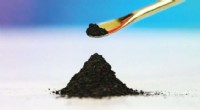
* Barium Sulfate (BaSO₄): Insoluble in water, white solid.
* Potassium Chloride (KCl): Soluble in water, white solid.
Separation Method: Solubility Difference
1. Dissolving: Add water to the mixture of BaSO₄ and KCl. The KCl will dissolve, forming a solution. The BaSO₄ will remain undissolved as a solid.
2. Filtration: Filter the mixture through a filter paper. The BaSO₄ will be trapped on the filter paper, while the KCl solution will pass through.
3. Evaporation: Carefully evaporate the water from the KCl solution. The KCl will be left behind as a solid.
Important Note:
* This method assumes you have a mixture of solid BaSO₄ and solid KCl.
* It's essential to use a filter paper with a fine enough pore size to capture all the BaSO₄ particles.
Additional Notes:
* Safety: Barium sulfate is considered safe for most uses. However, it's always a good idea to wear appropriate safety gear (gloves, goggles) when handling chemicals.
* Alternative Methods: While the solubility method is the most common, other methods might be suitable depending on the scale of the separation and the specific requirements:
* Centrifugation: This method could be used to separate the solid BaSO₄ from the KCl solution.
* Decantation: Carefully pouring off the KCl solution, leaving the BaSO₄ behind, could be used if the particles settle well.
Let me know if you'd like more details about any of these methods or have any other questions!