Here's the breakdown:
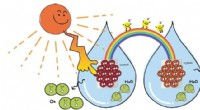
* Compounds that increase the number of hydroxide ions (OH-) when dissolved in water are called bases. This is a key defining characteristic of bases.
* Bases turn red litmus paper blue. This is a classic indicator test for bases.
* Bases react with acids to form salt and water. This is a neutralization reaction, a fundamental concept in chemistry.
However, the statement is missing one important point: Not all bases are hydroxide-containing compounds.
Examples of bases that don't contain hydroxide ions:
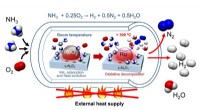
* Ammonia (NH3): Ammonia dissolves in water to form ammonium ions (NH4+) and hydroxide ions (OH-).
* Carbonate ions (CO32-) and bicarbonate ions (HCO3-): These ions react with water to produce hydroxide ions and the corresponding acids.
Therefore, a more accurate statement would be:
"Compounds that increase the hydroxide ion concentration in water, including those that don't contain hydroxide ions, are bases. Bases turn red litmus paper blue and react with acids to form salt and water."