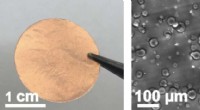
1. Alloy:
* Definition: A mixture of two or more metals (and sometimes non-metals) that are melted and combined, then cooled and solidified.
* Characteristics: Alloys often have properties different from their individual components. For example, they might be:
* Stronger: Bronze (copper and tin) is stronger than either copper or tin alone.
* More resistant to corrosion: Stainless steel (iron, chromium, nickel) resists rusting.
* Lower melting point: Solder (tin and lead) melts at a lower temperature than either metal individually.
2. Heterogeneous Mixture:
* Definition: The metals are simply mixed together physically, without being melted and combined chemically.
* Characteristics: They retain their individual properties and can be separated by physical means.
Examples:
* Brass is an alloy of copper and zinc.
* Steel is an alloy of iron and carbon, often with other metals added.
* Bronze is an alloy of copper and tin.
* A mixture of iron filings and copper powder would be a heterogeneous mixture.
Key takeaway:
* Melting and combining metals creates alloys, with new properties.
* Mixing metals without melting them results in a heterogeneous mixture.