Here's the balanced chemical equation:
Fe(OH)₃ (s) + H₃PO₄ (aq) → FePO₄ (s) + 3H₂O (l)
Explanation:
* Iron(III) hydroxide (Fe(OH)₃) is a solid, brown precipitate.
* Phosphoric acid (H₃PO₄) is a colorless, corrosive liquid.
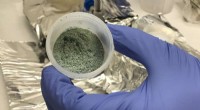
* Iron(III) phosphate (FePO₄) is a yellow, insoluble solid.
* Water (H₂O) is a liquid.
Mechanism:
The reaction involves the transfer of protons (H⁺) from the phosphoric acid to the hydroxide ions (OH⁻) in iron(III) hydroxide. This neutralization reaction forms water and iron(III) phosphate, which precipitates out of solution as a yellow solid.
Observations:
* When phosphoric acid is added to iron(III) hydroxide, a yellow precipitate of iron(III) phosphate will form.
* The reaction will release heat, indicating that it is exothermic.
Note:
The reaction can be carried out in a laboratory setting. However, it is important to handle phosphoric acid with care as it is corrosive.