Physical Properties:
* High melting and boiling points: Ionic bonds are strong electrostatic attractions between oppositely charged ions, requiring a significant amount of energy to break. This leads to high melting and boiling points.
* Solid at room temperature: The strong forces holding ions together in a rigid lattice structure usually result in a solid state at room temperature.
* Brittle: The rigid structure of ionic compounds makes them prone to shattering when struck. When an external force is applied, the ions can shift, leading to a misalignment of charges and a strong repulsive force that causes the crystal to break.
* Good conductors of electricity when molten or dissolved: In the solid state, ions are fixed in their lattice positions and cannot move freely to conduct electricity. However, when molten or dissolved, the ions become mobile and can conduct electricity.
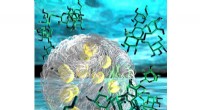
* Usually soluble in polar solvents: Water is a good solvent for ionic compounds because its polar molecules can surround and interact with the ions, weakening the ionic bonds and allowing the compound to dissolve.
Chemical Properties:
* React with other ionic compounds to form new compounds: Ionic reactions often involve the exchange of ions between reactants. For example, sodium chloride (NaCl) reacts with silver nitrate (AgNO₃) to form silver chloride (AgCl) and sodium nitrate (NaNO₃).
* Form electrolytes when dissolved in water: When ionic compounds dissolve in water, they dissociate into their constituent ions, which can then conduct electricity, making the solution an electrolyte.
Additional Notes:
* Some ionic compounds, like mercury(II) chloride (HgCl₂), have relatively low melting points due to weaker ionic bonds.
* The properties of ionic compounds can be affected by factors such as the size and charge of the ions, the crystal structure, and the presence of impurities.
Overall, the distinctive properties of ionic compounds are largely attributed to the strong electrostatic interactions between oppositely charged ions and the rigid, crystalline structures they form.