Here's why:
* Sodium (Na) is a metal and has a tendency to lose one electron to form a positively charged ion (Na⁺).
* Nitrogen (N) is a nonmetal and has a tendency to gain three electrons to form a negatively charged ion (N³⁻).
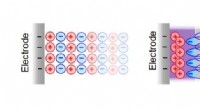
When these elements react, sodium loses its electron to nitrogen, forming an ionic bond. The resulting compound, sodium nitride (Na₃N), consists of a lattice of Na⁺ and N³⁻ ions held together by electrostatic forces.
Key characteristics of ionic compounds:
* Formed by the electrostatic attraction between oppositely charged ions.
* Typically formed between metals and nonmetals.
* High melting and boiling points.
* Good conductors of electricity in the molten state or when dissolved in water.
Molecular compounds, on the other hand, are formed by the sharing of electrons between nonmetal atoms. They typically have lower melting and boiling points than ionic compounds and are usually poor conductors of electricity.